
Who Pays for Concrete Spalling? Navigating Strata vs. Lot Owner Liability in NSW & QLD is one of the most stressful questions an apartment owner, committee member, or strata manager can face once cracking concrete, rust stains, or falling fragments start showing up. In practical terms, the answer usually depends on one issue first: is the damage on common property, or is it part of the lot owner’s responsibility? In both New South Wales and Queensland, that distinction shapes who organises the work, who approves the budget, and who ultimately pays.
Concrete spalling strata liability can quickly become a live issue when a balcony edge, slab soffit, column, planter box, or façade starts deteriorating. While many owners casually call it “concrete cancer,” the legal and cost question is rarely solved by labels alone. You need to check the strata plan, scheme by-laws, building format plan where relevant, prior upgrades, and whether the affected element is common property or lot property.
Why concrete spalling turns into a strata cost dispute so often
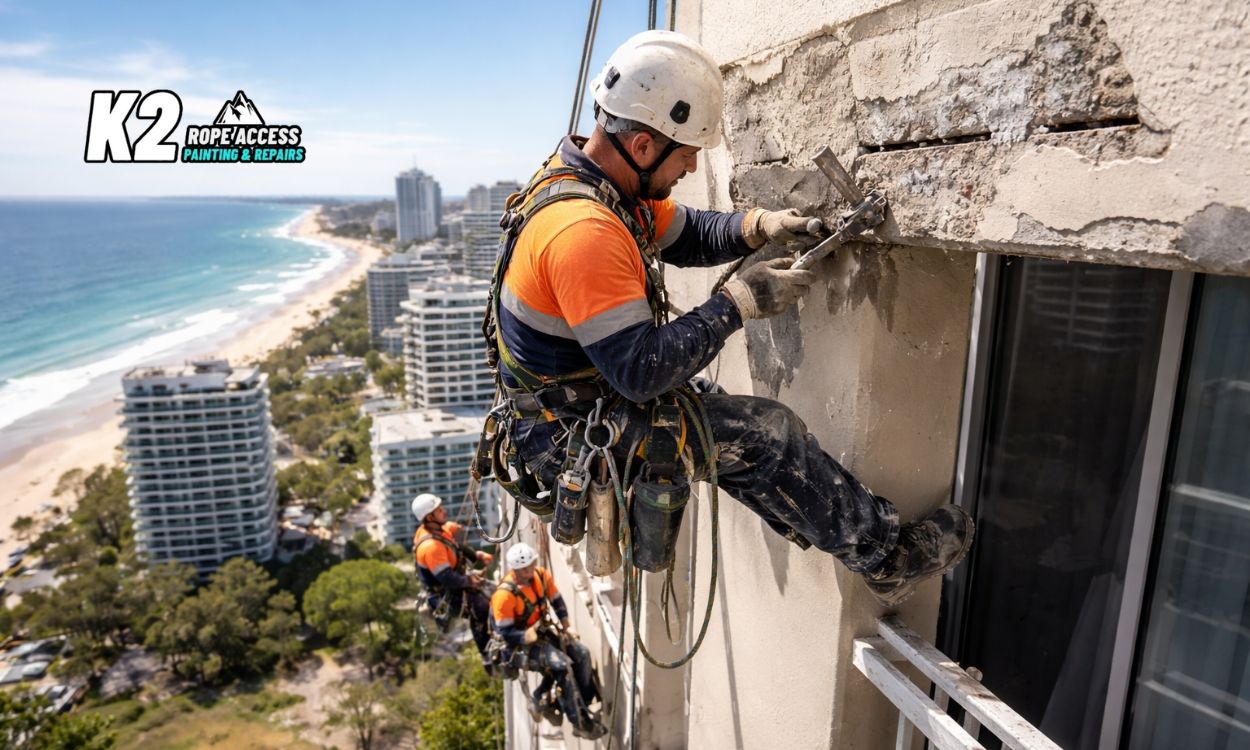
Concrete spalling usually begins when moisture reaches embedded steel, the steel corrodes, expands, and forces the surrounding concrete to crack and break away. By the time the damage is visible, the issue may already involve waterproofing failure, membrane breakdown, poor drainage, rusting reinforcement, or deeper structural deterioration.
That is why the question of who pays for concrete cancer often becomes contentious. The visible damage may appear to sit near a private balcony or inside the apparent boundary of a lot, but the cause may still relate to structural elements, slab edges, façade components, or waterproofing systems maintained by the owners corporation or body corporate.
If your scheme is dealing with early warning signs, it helps to obtain a professional scope before arguments harden. A specialist assessment can also support budgeting, tendering, and staged remediation. Where repairs are needed, a committee or manager can start with a proper plan through concrete spalling repair solutions for strata buildings.
NSW: when the owners corporation usually pays
In NSW, the owners corporation generally has responsibility for maintaining and repairing common property. That usually means structural slabs, external walls, balcony structures, and other building elements that form part of the common fabric of the building. This is why concrete spalling repair responsibility NSW often sits with the owners corporation rather than the individual owner.
Just as important are the owners corporation maintenance duties NSW. If concrete deterioration affects common property, the owners corporation cannot simply leave it because funding is tight or because there is disagreement over scope. Delay can make the repair more expensive, increase safety risks, and expose the scheme to further disputes.
That does not mean every owner is off the hook. If the damage is tied to an owner-installed finish, unauthorised alteration, or an item clearly inside the lot boundary and not otherwise treated as common property, responsibility can shift. That is why concrete cancer strata vs lot owner is never a one-size-fits-all question.
QLD: body corporate liability depends heavily on plan type and boundaries
In Queensland, the body corporate must maintain common property and certain structural elements in good condition, but liability can become more nuanced depending on the scheme layout. Body corporate concrete repairs QLD may include common property and, in some schemes, structural elements that are not straightforward from a layperson’s point of view.
For that reason, body corporate structural defects QLD often requires a close reading of the community management statement, survey plan, and any exclusive use arrangements. In many disputes, owners assume a balcony or wall is privately theirs because they use it, while the underlying structure may still sit within the body corporate’s maintenance obligations.
Where the line is blurred, the real issue is concrete spalling common property vs lot property. That is the question that should be answered first, ideally with both legal and technical input before major spending decisions are made.
Is concrete cancer covered by strata insurance?
A common question is: is concrete cancer covered by strata insurance? Often, owners hope insurance will absorb the cost. Sometimes it may respond to resulting damage or specific insured events, but gradual deterioration, poor maintenance, and long-term building defects are often treated very differently from sudden accidental damage.
That means many schemes eventually face concrete cancer repair costs strata through normal funding channels rather than relying on a clean insurance payout. In real terms, that can mean using the existing sinking or capital reserve, raising levies, or approving extra contributions.
If the building needs planned rectification rather than patchwork, committees should think beyond the cheapest quote and focus on scope, access method, safety, and durability. A well-prepared remediation pathway usually starts with specialist façade and concrete repair works for NSW and ACT buildings.
How repairs are commonly funded in practice
If the damaged area is the responsibility of the scheme, payment often comes from the reserve funds already set aside for major works. In NSW, that ties directly into the capital works fund concrete repairs discussion. In older buildings, especially where deterioration has been deferred for years, the balance may not be enough.
That is when a strata special levy for concrete cancer becomes a real possibility. Owners rarely like hearing it, but a special levy is often cheaper than allowing water ingress, corrosion, and falling concrete to spread across more of the building envelope.
What lot owners can do when liability is disputed
If you are an owner facing visible damage, do not rely on verbal assurances alone. Put the issue in writing, request confirmation of responsibility, and ask for the relevant plan or by-law if the committee says it is your problem. Clear records matter, especially where lot owner rights concrete spalling are being overlooked.
If there is still disagreement, the matter can escalate into a strata dispute concrete spalling case. Depending on the state, that may involve mediation, adjudication, tribunal action, or separate defect recovery steps. In some situations, strata building defects compensation may also become relevant, especially where recent construction, defective work, or developer liability is still in play.
The practical answer: start with boundaries, then act fast
The shortest honest answer is this: concrete spalling is usually paid for by the party responsible for the affected property element, and in many apartment buildings that means the owners corporation in NSW or the body corporate in QLD if the damage is on common or structural property. But assumptions are expensive.
The right approach is to confirm boundaries, document the defect, obtain an expert scope, and move before the problem grows. For committees, managers, and owners dealing with live deterioration, book a concrete spalling repair assessment for your strata building and get clarity on scope, urgency, and next steps before costs escalate.