Is painting a commercial building considered a capital improvement? In many cases, the answer is no — but it depends on the reason for the work, the scope of the project, and whether the painting is simply restoring the building or forms part of a larger capital upgrade.
For owners, strata committees, facilities managers, and commercial property decision-makers across NSW and the ACT, this question matters for more than accounting. It affects budgeting, tax treatment, depreciation, capital works planning, and how building maintenance is documented. In practice, painting commercial property repair vs capital improvement is not always a simple line. A routine repaint may be treated very differently from coating works delivered alongside façade remediation, concrete repair, waterproofing, or major external upgrades.
The short answer: painting is not always a capital improvement
When people ask whether repainting a commercial building is a capital asset, they are usually trying to work out whether the cost should be treated as routine maintenance or capital expenditure. Broadly, painting that restores a property to its existing condition is often treated as a repair or maintenance expense. On the other hand, painting that is tied to a larger improvement project may be treated as capital expenditure.
That is where the debate around capital improvement vs repair painting usually begins.
If the work is simply refreshing aged or weathered coatings, touching up damaged finishes, or protecting surfaces as part of ongoing upkeep, it is often closer to commercial building maintenance vs capital improvement. But if the painting is carried out as part of structural remediation, a major façade upgrade, or works that significantly improve or extend the life of the asset, the treatment can change.
How tax treatment usually works in real commercial projects
From a practical perspective, the question is less about whether paint itself is “capital” and more about what the project is actually doing.
When painting is usually treated as repair or maintenance
Painting is more likely to fall under routine maintenance vs capital improvement painting where the scope is limited to preserving the existing building. That can include:
-
repainting faded or weathered surfaces
-
correcting peeling coatings
-
restoring presentation after normal wear and tear
-
periodic internal or external repainting to keep the building in serviceable condition
This is the situation most people mean when they ask about a commercial painting tax deduction or a tax write-off for painting commercial property.
When painting may be treated as capital expenditure
Painting is more likely to be capital in nature when it directly supports a broader improvement program. Examples include:
-
façade remediation packages
-
major defect rectification works
-
external upgrade programs that materially improve the building
-
repainting completed as part of concrete spalling repairs, waterproofing works, or membrane replacement
-
large projects that extend useful life or form part of a new asset improvement plan
In that situation, the issue becomes can you capitalize painting a commercial building? In many cases, the answer may be yes — not because paint alone created a new asset, but because the painting is part of a larger capital expenditure painting commercial property project.
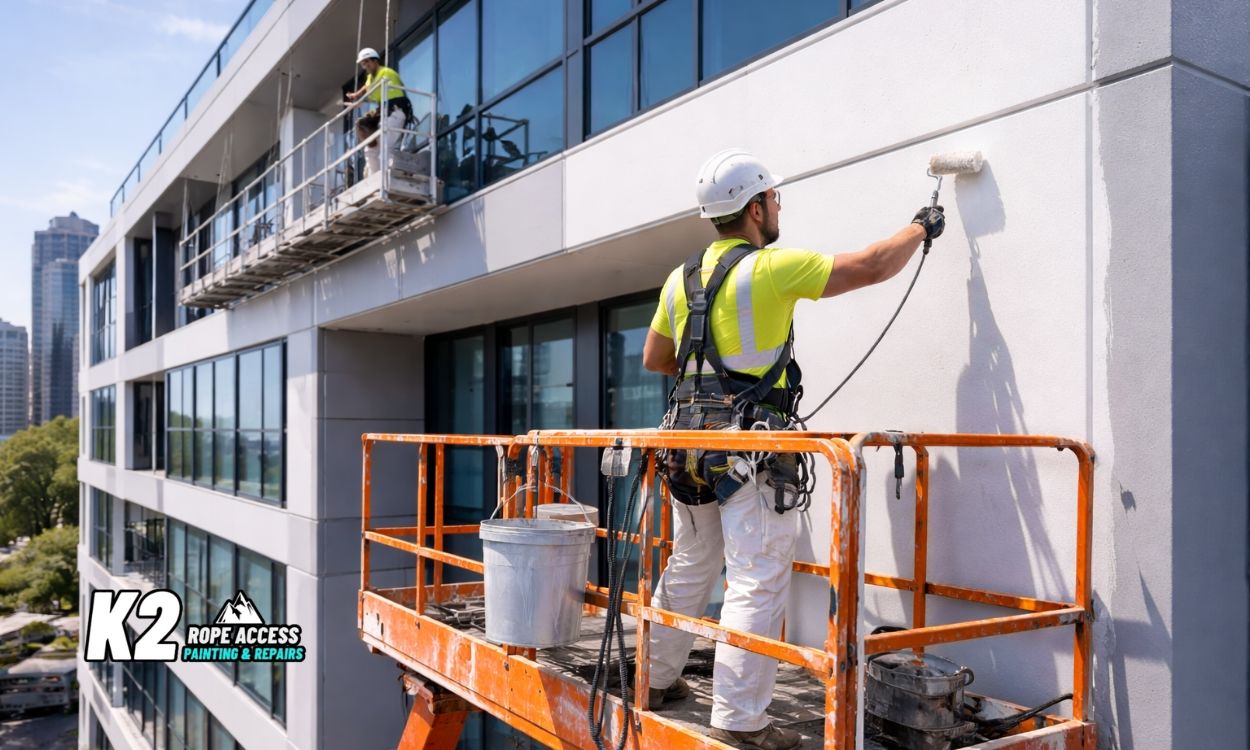
For commercial property owners planning external works, this is why it helps to get a detailed scope before the job begins. A properly documented remedial scope makes it easier to distinguish maintenance items from broader capital works. If you are planning façade works, commercial painting preparation and remedial scope planning can help clarify what the project is really intended to achieve.
Repair vs improvement: the questions accountants usually ask
A useful way to assess capital improvement vs repair painting is to ask a few practical questions:
1. Is the painting restoring, or upgrading?
If the work is restoring surfaces to their previous condition, it is usually closer to repair. If it materially enhances performance, value, or lifespan as part of a wider upgrade, it leans more toward capital treatment.
2. Is the painting standalone, or part of a larger project?
A standalone repaint is often easier to classify as maintenance. Painting wrapped into concrete repair, waterproofing, sealant replacement, or defect rectification is more likely to raise capital treatment questions.
3. Does the work fix wear and tear, or form part of long-term building improvement?
This is often the real dividing line in commercial building maintenance vs capital improvement.
Is exterior painting a capital expense more often than interior painting?
Not automatically. Exterior work often gets more scrutiny because it is commonly bundled with remedial or façade upgrade programs. But interior painting commercial building tax treatment can raise the same issue. If internal painting is part of a fit-out, major refurbishment, or broader improvement, it may be treated differently from a routine repaint between tenants or after normal use.
So while people often ask is exterior painting a capital expense, the better question is whether the full project is a repair, a maintenance item, or a capital improvement.
What about IRS rules for painting a commercial building?
For US tax treatment, IRS rules for painting a commercial building generally draw a similar distinction: painting by itself is often treated as a repair expense, but painting that directly benefits or forms part of a larger capital improvement may need to be capitalised and depreciated.
That matters for readers searching terms like how to depreciate painting a commercial building or commercial property painting depreciation life. If the painting is capitalised, depreciation rules may apply rather than an immediate deduction. If it is classified as ordinary repair or maintenance, the treatment may be more immediate.
In Australia, owners and business operators should rely on ATO guidance and their accountant’s advice rather than assuming US rules apply in the same way.
Why this matters before you approve a painting quote
Too many building owners treat painting as a simple cosmetic line item. In reality, the scope behind the quote can affect tax treatment, maintenance planning, and long-term façade performance.
A quote for “painting only” may sit in one category. A quote that includes crack repairs, sealant replacement, moisture rectification, substrate preparation, coating failure remediation, and full access planning may sit in another entirely.
That is why it pays to speak with a contractor who understands the difference between a repaint and a true remedial scope. If you need project clarity before you commit funds, speak with K2 Rope Access about your commercial painting and façade scope.
The smarter way to approach commercial painting decisions
If you are trying to work out whether is painting a commercial building considered a capital improvement, the safest answer is this: sometimes, but not always.
Painting done as ongoing upkeep is commonly treated as repair or maintenance. Painting delivered as part of a larger improvement, remediation, or capital works program may need to be treated as capital expenditure instead. The distinction depends on scope, purpose, and documentation.
For commercial and strata assets, the smartest move is to define the project properly before work starts. That gives your accountant clearer records, reduces confusion around commercial painting tax deduction treatment, and helps ensure the building receives the right technical solution rather than a cosmetic patch.
If you are planning façade repainting, remedial preparation, or access-based external works in NSW or the ACT, review K2 Rope Access’s commercial painting preparation approach to scope the job correctly from the outset.